Carl Jung On What To Do After Healing

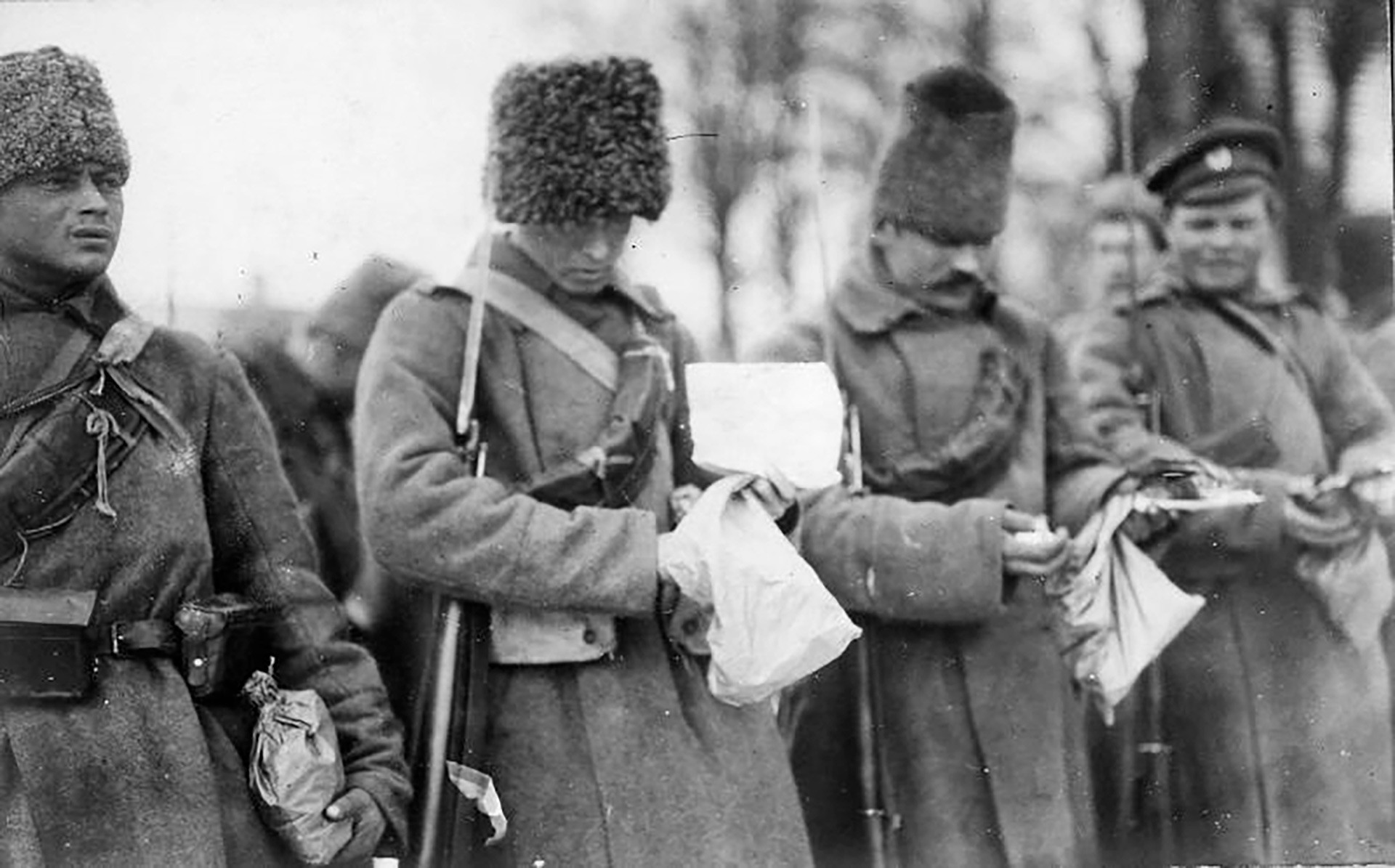
1917 …a poem
An ocean of land, of life measured in waves
Like the waves and oceans
of breezes stirring the silver-tinged leaves
of birch branches; their siren call drawing
the traveler deeper into the forest
that beckons with the promise of infinity
The waves and oceans of history
That have flowed over the land, of armies
from north and east and west, lusting to tame steppe and forest
And place the yoke on those who from forest and steppe are born,
Raising ax and scythe and sword to defend
Their earthly mother; maht’ zehmlyah
The opera of the seasons; of winters appeased
With souls deposited in the Bank of Eternal Hope:
hope kept warm by the promise of Spring, with its offer
of redemption; redemption from suffering and servitude
and visions of a perfect world,
Watered and fed by incense and hymn and the committing
Of the soul into the arms of One who is equal parts
Love and grace and forgiveness and final redemption,
And of power that is awe itself
Meanwhile, back in the palace, heaven’s delegate in the
here and now wills to stay strong; as his forbears stayed
strong beyond the strength of wild horsemen from the east,
beyond the strength of Northmen in dragon-prow’ed boats
and from the west cavaliers fancy pants-ed and bewigged
Strong like the fir and spruce that go on and on
and on in his endless forests; strong like the far
spaces that go on for days and weeks and months and years;
that go on so far that they promise to tear down the curtain
that parts time and space and eternity.
What peace without blood?
What life-renewing Spring without a hell of cold and ice?
What shield from an uncertain tomorrow without the terror
of power wielded today,a power that doesn’t spare even
those of the same royal seed;
of the power of death deadly enough to eat the lives of so many
in games of chess whose pieces are the millions he proposes
to live and die for per election by He who is holy;
And pieces played by the decidedly unholy
who would wrest their land from the grasp of a cruel fate
and pilot millions to history’s—holy history’s— far shore
Calling on a thousand years of prayer and the blood of many martyrs;
while straining to lasso paradise into the present.
Thirsting to end the slaughter with its mounds of corpses,
there by the grace of a royal tiff among cousins while
monocle’d men in tattered shirts and crumb-covered
cravats argue over tea in dingy sitting rooms,
over the best way to bring heaven down to earth
Of how to create a brave new world based on the
unholy scriptures of those from other lands.
Let other nations, other peoples belong to Man
Where is a future for this land, a tomorrow
that glows with the light of heaven?

We live we die we eat pizza pie
We rush we strive we stress we thrive
And sometimes we forget
That we’re even alive.
We love we laugh
We smile we cry
Sometimes we forget
Why we even try
If this is life
Is death but a sleep?
And if so, shall we also wake?
Moments come and moments go
And in the best of them
We know that we know
And this knowing is sure
And firm and real
And shows us a path
That is surer than math
And those moments
give us a peek at
Something great
Something unseen
Yet Is realer than real
And well worth the wait.
Ernest Hemingway on Writing / Hemingway’s 7 Tips for Writing:
…from awritingrooom.com
1: To get started, write one true sentence.
“Sometimes when I was starting a new story and I could not get it going, I would sit in front of the fire and squeeze the peel of the little oranges into the edge of the flame and watch the sputter of blue that they made. I would stand and look out over the roofs of Paris and think, ‘Do not worry. You have always written before and you will write now.’”
2: Always stop for the day while you still know what will happen next.
“The best way is always to stop when you are going good and when you know what will happen next. If you do that every day when you are writing a novel you will never be stuck.”
3: Never think about the story when you’re not working.
“I had learned already never to empty the well of my writing, but always to stop when there was still something there in the deep part of the well, and let it refill at night from the springs that fed it.”
4: When it’s time to work again, always start by reading what you’ve written so far.
“When it gets so long that you can’t do this every day read back two or three chapters each day; then each week read it all from the start.”
5: Don’t describe an emotion—make it.
“In writing for a newspaper you told what happened and, with one trick and another, you communicated the emotion aided by the element of timeliness which gives a certain emotion to any account of something that has happened on that day; but the real thing, the sequence of motion and fact which made the emotion and which would be as valid in a year or in ten years or, with luck and if you stated it purely enough, always, was beyond me…”
6: Use a pencil.
“If you write with a pencil you get three different sights at it to see if the reader is getting what you want him to. First when you read it over; then when it is typed you get another chance to improve it, and again in the proof.”
7: Be Brief.
“It wasn’t by accident that the Gettysburg address was so short. The laws of prose writing are as immutable as those of flight, of mathematics, of physics.”
1.1K
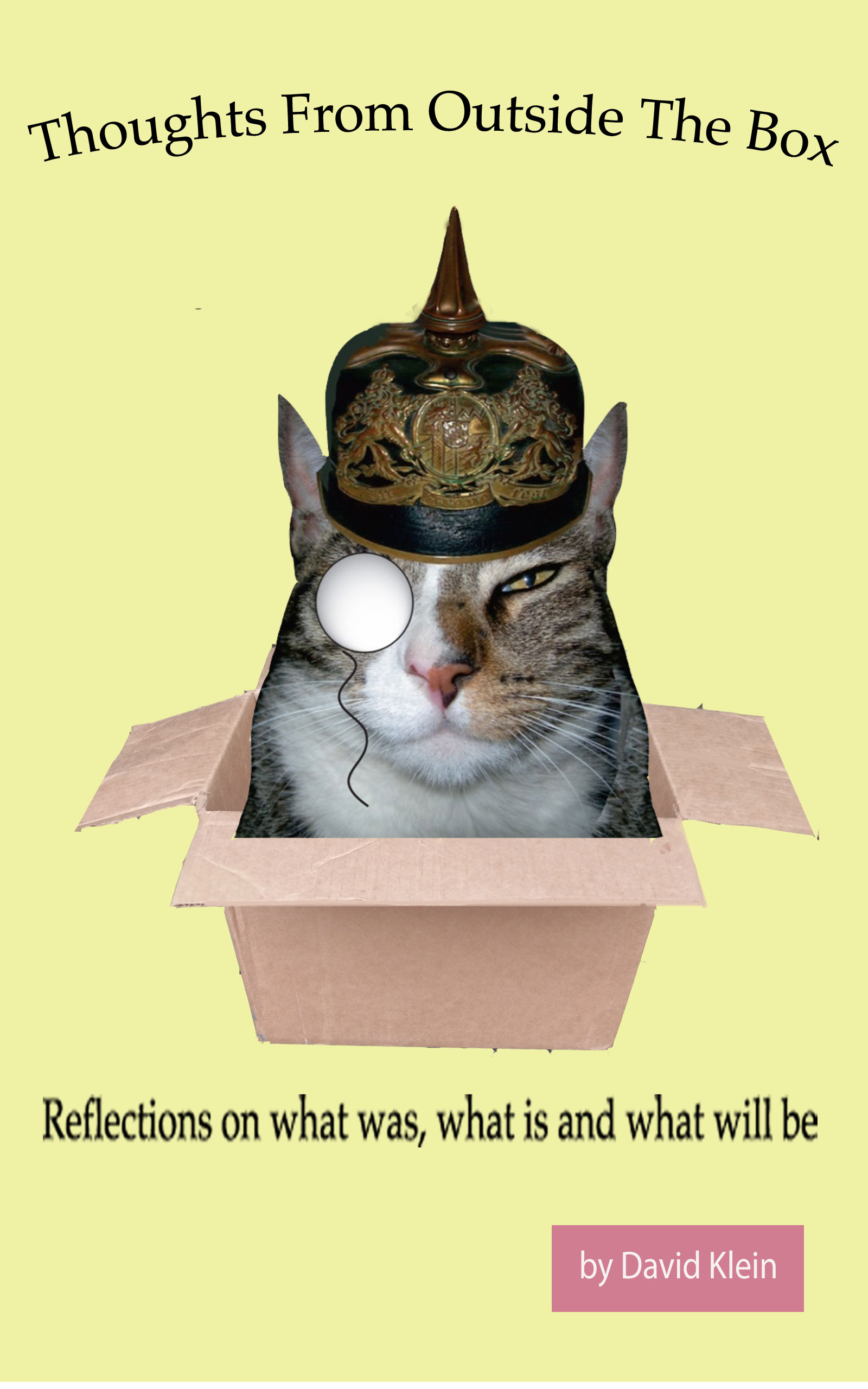
Is money a form of artificial intelligence? Is it time to replace it with something more intelligent and less artificial?
…from “t From Outside The Box”
On his 35th birthday, Misha Bobitch, lover of chess and unavailable women, left Russia for a new life in the New World. After a flight punctuated by generous helpings of (reheated) pelmeni, more or less doable Vodka and three stopovers in equally overcrowded and under-heated airport terminals, he spotted a cab parked right outside the front door of the arrivals terminal of JFK airport; its driver having facial features remarkably Slavic but slightly less wintry and Soviet (maybe Czech or Polish) than his own. During the first leg of the ride into Manhattan, through the not-mean streets of quasi-suburban Queens, Misha paid little attention to that mix of slush and sunlessness which which is common to midwinter New York. His view was, instead, inward, his mind filled with snippets of Moscow on the Hudson and a blur of scenes from the Cagney-Bogart shoot-em-ups that he’d watched in the well-stocked film library of a friend who worked in the KGB’s media department.
Guessing that his passenger was near numb from having just completed the multi-stop odyssey that is so often the fate of his fellow cast-offs of the Great Social Experiment who flew “coach” from points East, the driver chose to spend the time listening to a stream of soft jazz piano music from a local FM station rather than try to engage his passenger in conversation. By and by, on approaching the East River and that magnificent view of The City, the sound of a suddenly shifting body came from the back seat. “Can you recommend a good place to stay? I don’t have much money and I don’t need anything luxurious!” Having made his often unhappy wife of 12 years happy with a state-of-the-art television paid for with tips from umpteen plus fellow Ost Europeans who were grateful for his recommendation of a relatively cheap hostelry in this epicenter of greed and Darwinian capitalism, the driver nodded his head and continued on the last leg of the journey into Manhattan. After a quick check-in and recital of the rules and regulations – receipt in hand for two prepaid weeks at the midtown Manhattan “Y”, Misha was able to pry from the young desk clerk the name and address of the nearest all-night café. This proved to be a fairly easy task for him once the young (and by the look of his ketchup-stained clip-on tie and Payless footwear) not-altogether-hip law student at New York University gave ample proof that he was more than happy to be distracted from his studies by Misha’s entreaty.
Now all-night cafe equals chess in certain parts of Manhattan, and hunting up a chess game on a bitterly cold January evening certainly would not make a cultured Muscovite feel any less at home on his first night out on foreign shores. The ritual of checking into a humbly priced Manhattan hostelry got out of the way, his mind was now occupied by the promise of hot tea and chess that was held out by the post-it note — just given to him by the desk clerk—that bore the name and address of a nearby coffee house. He entered his room, and after quickly arranging his toiletries on the few glass shelves under the medicine cabinet mirror and shoving his suitcase under the bed, he headed down to the lobby and out the ”Y’s” front door—noticing, while passing the reception area, that the desk clerk/ law student had resumed his assault on his cardboard tub of Egg Foo Yong and his study guide to the New York State bar exam.
The first step of his new life finally in motion, Misha was neither happy nor sad. After all, his decision to leave Moscow was a decision based on neither the whim of the born adventurer nor a deeply felt dissatisfaction with life in the Motherland. For (ex) Comrade Bobitch, truth be told, was not a terribly deep man. He had no real idea what his life was about, and certainly no idea of what it was about to become.
We live we die we eat pizza pie
We rush we strive we stress we thrive
Sometimes we forget
That we’re even alive.
We love we laugh
We smile we cry
Sometimes we forget
Why we even try
If this is life
Is death but a sleep?
And if so, shall we also wake?
Moments come and moments go
And in the best of them
We know that we know
And this knowing is sure
And firm and real
And shows us a path
That is surer than math
And those moments
give us a peek at
Something great
Something unseen
Yet Is realer than real
And well worth the wait.

Hold Off On That First Cup Of Coffee! why-you-shouldn´t-drink-coffee-before-9:30am from Good Housekeeping Read More

Interview With Artist Chris Ogiebo
Questions begin with a boldfaced letter Q and answers with a boldfaced letter A
Q: Were you always an artist? Was there a moment when in a sudden flash of insight, you realized that you were or did you cultivate your inner artist gradually?
A: Yes, I was born into the family of an artist, as a little boy, I use to work in my father’s studio, I had passion for art as a child, drawing on the walls of my father’s house and drawing on my school books, there was one day in the town of Auchi, a classmate of mine saw me and called my name, Christopher 🡺 Do you still draw on books.
Q: Training and development…how did you get to where you are today as far as style and media go? Was it mostly trial and error? What techniques did you experiment with along the way?
A: I got to where I am today through mentorship, I was mentored in my father’s studio as a wood sculptor, I did general painting during my national diploma, in Auchi Polytechnic. In my Higher National Diploma, I did not major in painting, instead I majored in sculpture. It was in 2012, when I was newly married, that a lecturer —Mr. Viyare Samuel— mentored me on painting.
Q: Early years….. were you encouraged by those in your immediate environment to pursue a career as an artist? At what age did your formal training begin?
A: Yes, especially my father and friend Bayo, My formal training begin at the age of ten.
Q: What is it like to be an Artist? Agony? Ecstasy? Something in between the two?
A: I derive joy while working on an art piece.
Q: Do you feel that your current work is where you want to be? Do you have any plans for trying new and / or different subject matter techniques?
A: No, as an experimental artist, I have plans for trying new and different subject matter techniques
Q: With the advent of the internet and the availability of buying art online, how has it affected you and your plans regarding the sale of your artwork?
A: The internet has affected me positively. It enables art lovers, collectors, potential collectors and gallery owners to see your artwork and connect with the artists. I have been able to make sales online.
Q: What advice would you give young artists starting out today in view of all that technology has made available to us?
A: I would advise them to be themselves and focus on the daily improvement of their gift and talent so that they can stand out in the art world. They should also take advantage of technology by putting their works out there.
CONTACT INFORMATION FOR CHRIS OGIEBO
Address :No10 Warrake Road, Auchi, Edo State, Nigeria
Email : chrisogiebo@yahoo.com
Call for an appointment to see works on my studio
+2347035843956
+ 2349132648753
Instagram : Chrisogiebo / merit interior gallery 2159
Linkedin : Chrisogiebo
Facebook: Chrisogiebo / merit interior gallery
… for the growing good of the world is partly dependent on unhistoric acts; and that things are not so ill with you and me as they might have been, is half owing to the number who lived faithfully a hidden life, and rest in unvisited tombs.
-George Eliot
Middlemarch